
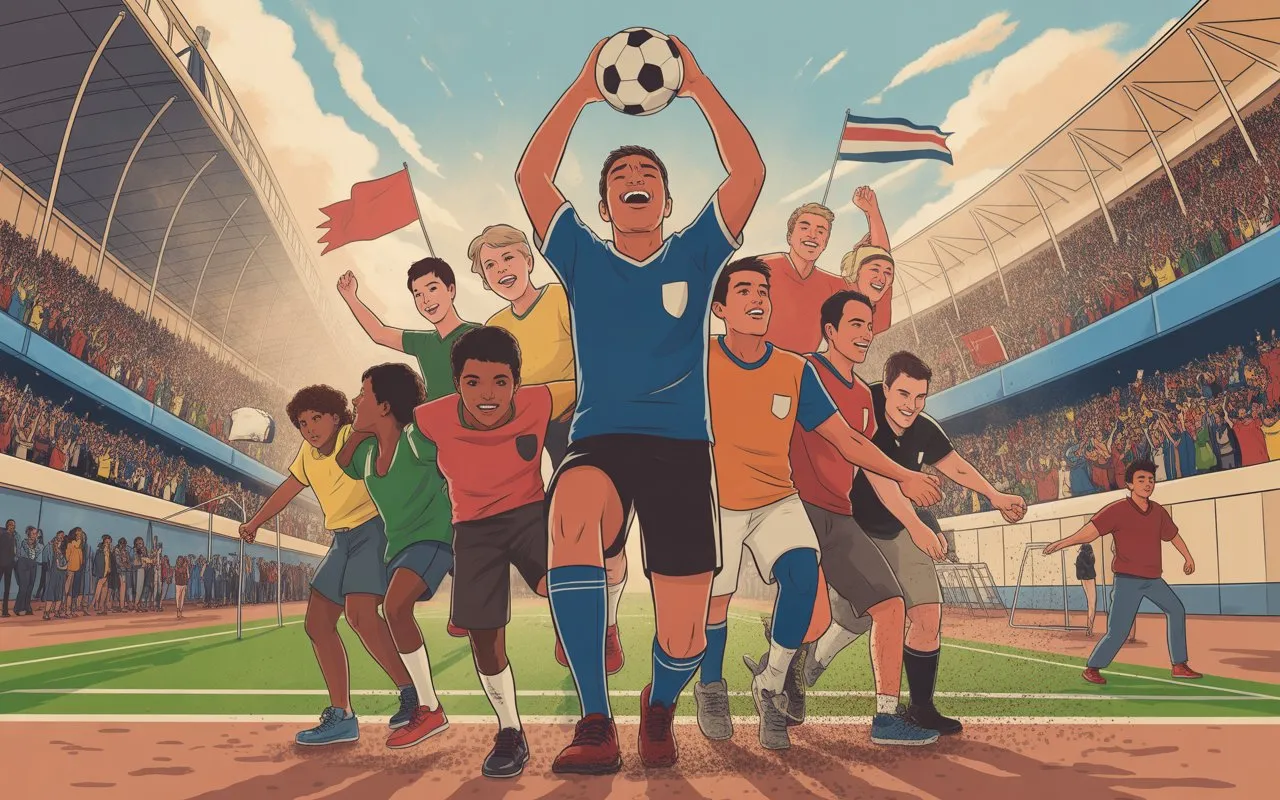
Football games have a mysterious power to stop time. From packed stadiums to quiet living rooms where families are glued to the screen, this dawn deserves no other consideration. At the exceptional beginning of any great combination, something powerful happens: feelings are aroused, personalities merge, and millions – sometimes billions – of people feel connected by a ball and a shared set of rules.
But why this one? Why not the others? The real reason football has become the world’s favorite goes much deeper than goals, trophies, or popular players. It lives in history, brain research, culture,e and the desire to belong to simple people.
A Diversion That Anyone, Anywhere Can Play
One of the most overlooked reasons behind football’s global dominance is its openness. Unlike many sports that require expensive equipment, fancy officiating, or strict conditions, football thrives almost anywhere.
What you really need is:
- Whatever it takes after the ball
- A little open space.
- Two temporary objectives (or indeed fair imaginations)
Children play naked on the dusty city streets, young people roam schoolyards, and experts perform in billion-dollar stadiums. This all-inclusiveness suggests that football has no place for a single class, race, or culture – it has a place for everyone.
This openness became an institution that enabled the game of football to spread rapidly across the land, especially in the mid-nineteenth and twentieth centuries, when exchange, colonization, and migration carried this scourge to every corner of the world.
Simple Rules, Eternal Drama
At its core, football is easy to understand:
- Score a goal by putting the ball into the opponent’s goal.
- Don’t use your hands (in most cases)
- The team with the highest goal will win.
This simplicity immediately appeals to modern fans. You don’t need a long history of knowledge to understand a combination. But within these simple rules lies an extraordinary complexity – the strategy, the arrangement, the contraction structure, and the talent of the user.
The beauty lies in the coordination. A single goal can change everything. Underdogs can defeat monsters. Matches can change in a matter of seconds. This constant pressure helps the audience to contribute by shouting from start to finish.
Unlike high-scoring games, the low-scoring nature of football intensifies with every minute. Every chance feels extraordinary. Every failure hurts. Every goal explodes meaningfully.
More Than Just Clothing: A Social Identity
In many countries, football isn’t just entertainment – it’s character. Clubs and national teams regularly talk about history, lawmaking, education, and local pride.
Think:
- Clubs founded by workers, students, or neighbors
- National group symbolizing autonomy or unity
- The rivalry has been going on for generations.
Supporting a team is earned, not chosen. It becomes part of your personality. Victory feels personal. Misfortune stings deeply. This passionate ownership is rare, and it’s a key reason why football games inspire such strong loyalty.
In countries like Brazil, Argentina, Britain, Germany, Nigeria, and Bangladesh, football talk routinely blends into everyday life. It directly matches moods. It brings out the overwhelming characteristics. The players become heroes – or villains.
Moments Curated And Shared Globally
Few events take place on the ground more than the FIFA World Cup. Every four long hours, the world stops altogether. Time zones blur. Boulevards are cleared. Entire countries hold their breath.
This shared global engagement is a big reason why football has won the hearts of the world. When billions of people watch the same matches, celebrate the same goals, or mourn the same defeats, there is a remarkable sense of solidarity.
Moments like:
- A last-minute winner
- An unprecedented sadness
- An amazing goal repeated over decades
They become collective memories, remembered long after the final score has been ignored. Football games create stories that transcend dialect and borders.
Passion Rather Than Perfection
Football is not always fair. And that’s part of its charm.
The best team doesn’t win over and over again. A referee’s choice, a little evasion, or a moment of luck can all make a difference. This playful attitude reflects real life, which makes the costume deeply human.
Fans don’t love football because it’s at the end of the game. They love it because it’s exciting and imperfect, and exciting. It rewards passion as well as accuracy.
That emotional rollercoaster—hope, despair, joy, anger—is an addiction. Once you contribute, it’s almost strange to let go.
Heroes, Stories And Dreams
Every era has its own icons. Players who rose from poverty to global fame. Youngsters who carried the confidence of a nation. Veterans chasing the last trophy.
These personal initiatives add to the notoriety of football matches, just like the matches themselves. Fans don’t watch the team; they read behind the story:
- Young talent
- The return of the fallen star
- The enduring legend of a club
Football makes dreams seem achievable. Many of the world’s greatest players started with nothing more than talent and confidence. This relativity inspires millions.
Media, Innovation, And The Rise Of The Present Day
Although football has ancient roots, its modern development is due to the media. TV, social media, sports stages, and smartphones have transformed local matches into a global sport.
Today, a fan in Bangladesh can spend time living with a club in Spain or Britain. The highlights are broadcast instantly. The brawl never stops. This game goes on 24/7.
This constant proximity keeps football games relevant throughout the ages, making them consistent without losing their essence.
A Dialect Without Words
Perhaps the most profound reason why football is the world’s favorite is this: it doesn’t require translation.
An objective celebration looks the same everywhere. The pain after a failure is usually captured. Joy, disaster, hope – football communicates through feelings, not through language.
In a world of disparateness, the costume provides an unusual common ground. For 90 minutes, the contrasts blur. All that remains is the game.
Latest Posts…
- Resident Evil Requiem Collector’s Edition – The Ultimate Fan Guide
- Code Vein Gift Guide – The Ultimate Picks for Every Vampire Hunter
- Code Vein IO – The Ultimate Guide for Mods, Release Info, and Gifts
- Code Vein 2 Release Date – Everything Fans Need to Know
- The Ultimate Guide to Code Vein Mods – Everything Beginners to Experts Need in 2026
The Real Reason, Finally Revealed
So why is football the world’s favorite sport?
Not because of money.
Not just for show.
Not really due to merit, although it has a lot of merit.
Football is for people. It is open, emotional, innovative, and deeply connected to individuals and communities. It gives individuals a place, stories, and shared moments that last a lifetime.
In conclusion, football doesn’t unite the world – it connects it to each other.
How many types of football games exist?
There are several types of football games played around the world. The main ones include association football (soccer), American football, Canadian football, rugby (union and league), Australian rules football, Gaelic football, and variations like arena football and flag football. Overall, there are about 8–10 recognized types, though local or regional variations may exist.
Which is considered the best football game?
The “best” football game depends on perspective. Globally, soccer (association football) is the most popular due to its simple rules and massive worldwide following. In the United States, American football is often considered the best because of its cultural significance and popularity. Some also consider rugby the best for its physical challenge, but it really depends on personal preference and region.
What are the different kinds of football games?
Football games can be categorized in different ways. They can be full-contact games like American football, rugby, or Australian rules football, or non-contact/limited-contact games like flag football and touch football. They can also be outdoor (soccer, rugby, Gaelic football) or indoor (arena football, futsal). Finally, they are distinguished by their rules: soccer follows FIFA rules, rugby has Rugby Union and League rules, and American/Canadian football follows gridiron rules.
What does the term “football game” mean?
A football game is a sporting contest between two teams where players try to move a ball toward a goal or scoring area. Depending on the type of football, this can involve kicking, carrying, or passing the ball. In simple terms, any competitive game played under football rules, whether it’s soccer, rugby, or American football, is considered a football game.


2 comments
Great post. I am facing a couple of these problems.
This is a truly fascinating perspective on the mechanics and history behind football games! The global passion for this sport is something that never ceases to amaze me.