
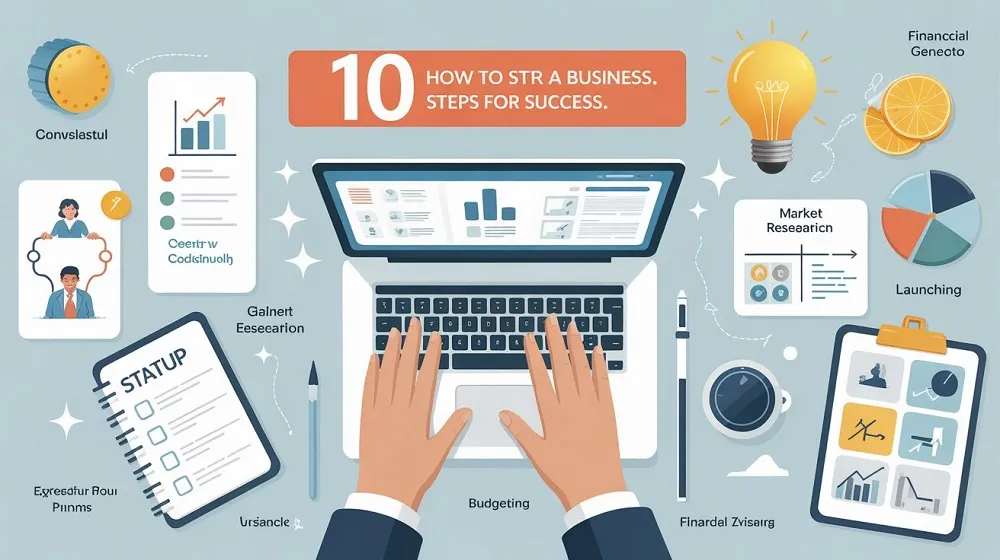
Beginning a trade can feel like standing at the edge of a cliff — energizing, terrifying, and full of questions. I keep in mind my to begin with endeavor at business: offering custom made lemonade as a kid. Truly, I spilled more than I sold, but it instructed me early lessons around determination and arranging. Learning How to Start a Business isn’t fair around cash; it’s almost mentality, technique, and those small humiliating botches you’ll snicker approximately afterward.
Step 1 – Discover Your Business Idea
Brainstorm and Explore
Ideas can come from anywhere:
- Your hobbies or passions
- Problems you’ve personally faced
- Observing trends in the market
I remember thinking, “Why isn’t there a coffee shop that serves cookies shaped like dinosaurs?” — maybe silly, but it’s an example of noticing gaps. When figuring out How to Start a Business, start with ideas that make you curious and excited.
Validate Your Idea
Before investing too much:
- Ask potential customers for feedback
- Check for similar businesses
- See if there’s demand or room to innovate
I once pitched a “self-watering plant” idea to my cousin — he laughed for five minutes straight. Validation avoids disasters later.
Step 2 – Conduct Market Research
Understand Your Audience
Who are you selling to?
- Age, location, and interests
- Pain points and desires
- Buying behaviors
I remember making flyers for a neighborhood craft sale — no kidding, I realized halfway that my target audience was actually the wrong block. Market research is key to How to Start a Business smartly.
Study the Competition
Learn from others:
- Analyze pricing strategies
- Observe marketing methods
- Note strengths and weaknesses
I once copied a competitor’s ad — then realized originality actually mattered. Knowing your competitors helps refine your approach.
Step 3 – Create a Business Plan
Outline Your Vision
A simple plan keeps you grounded:
- Define your business goals
- Plan short-term and long-term strategies
- Set realistic financial projections
I remember scribbling a plan on the back of a cereal box — felt kinda weird, but it worked as a start. A business plan is your roadmap for How to Start a Business successfully.
Financial Planning
Money talk is scary but necessary:
- Estimate startup costs
- Predict monthly expenses and revenue
- Plan for emergency funds
I once underestimated packaging costs — let’s just say my lemonade cups were taped together. Financial foresight avoids small disasters.
Step 4 – Choose Your Business Structure
Common Options
Structure affects taxes, liability, and operations:
- Sole proprietorship
- Partnership
- LLC or corporation
I remember calling a lawyer and asking, “Do I really need a lawyer to choose a lawyer?” — self-deprecating, but true. Picking the right structure is a major step in How to Start a Business.
Register Your Business
Steps include:
- Naming your business
- Filing for legal status
- Getting licenses or permits
I once registered a name only to find a cat café already had it — felt straight up wild. Proper registration protects your venture.
Step 5 – Secure Funding
Explore Funding Options
Starting capital matters:
- Personal savings
- Loans or grants
- Investors or crowdfunding
I remember asking my grandma for a loan — she gave me cookies instead. Finding funds is often creative in How to Start a Business.
Budget Wisely
Keep track of cash flow:
- Separate personal and business accounts
- Track every expense
- Monitor revenue regularly
I once bought pens in bulk and regretted it — funny now, stressful then. Budget discipline is crucial.
Step 6 – Build Your Brand
Craft Your Identity
Branding sets you apart:
- Choose a logo and color scheme
- Define your voice and message
- Create a memorable tagline
I remember doodling logos on napkins — some actually looked good. Strong branding helps others recognize your business instantly.
Online Presence
In today’s world, you need:
- A website
- Social media profiles
- Consistent content strategy
I once posted a selfie as my brand photo — felt kinda weird, but engagement spiked. Your online presence amplifies your How to Start a Business efforts.
Step 7 – Set Up Operations
Organize Your Workflow
Smooth operations reduce headaches:
- Outline daily tasks
- Assign responsibilities
- Use management tools
I remember juggling invoices and deliveries myself — chaos, but learned efficiency. Organized operations are essential for How to Start a Business.
Choose Vendors and Suppliers
Reliable partners matter:
- Compare prices and quality
- Establish relationships
- Set agreements clearly
I once got spoiled lemons from a new supplier — yep, lesson learned.
Step 8 – Marketing and Promotion
Develop a Strategy
Marketing drives sales:
- Social media campaigns
- Email marketing
- Local events and promotions
I remember handing out flyers in the rain — soggy, but people noticed. Marketing is a core part of How to Start a Business success.
Measure Success
Track results:
- Monitor website traffic
- Track leads and conversions
- Adjust campaigns accordingly
I once forgot to track leads — felt kinda dumb. Measuring outcomes ensures progress.
Step 9 – Launch Your Business
Soft Launch
Test waters before full rollout:
- Limited offerings
- Gather feedback
- Refine operations
I remember inviting friends first — brutally honest, but helpful. A soft launch reduces early errors.
Grand Opening
Celebrate and attract customers:
- Special promotions
- Social media announcements
- Engage local community
I once did a ribbon-cutting alone — kinda funny, but memorable. Launching right sets the tone for How to Start a Business.
Step 10 – Monitor, Adapt, and Grow
Continuous Improvement
Never stop learning:
- Track performance metrics
- Listen to customer feedback
- Innovate offerings
I remember ignoring feedback once — my product flopped. Adaptation is key in How to Start a Business.
Plan for Growth
Think ahead:
- Expand product lines
- Open new locations
- Explore new markets
I once imagined a global lemonade empire — laughed, but hey, dreams start somewhere. Growth planning ensures long-term success.
Conclusion
Learning How to Start a Business is a blend of procedure, inventiveness, and persistence. From finding your thought to nonstop enhancement, each step shapes your entrepreneurial travel. I keep in mind the chaotic, fun, and some of the time ungainly encounters that instructed me more than any book. With tirelessness, arranging, and a sprint of humor, anybody can turn an thought into a flourishing wander. Keep in mind, the travel itself is as profitable as the result.


1 comment
[…] Global Wise News has highlighted countless success stories where people literally started in their bedrooms and grew global audiences. Some even turned their hobbies — like knitting, gaming, or bizarrely specific art — into thriving businesses. I once tried selling hand-painted potato stamps. It didn’t last, but hey, lessons learned. […]