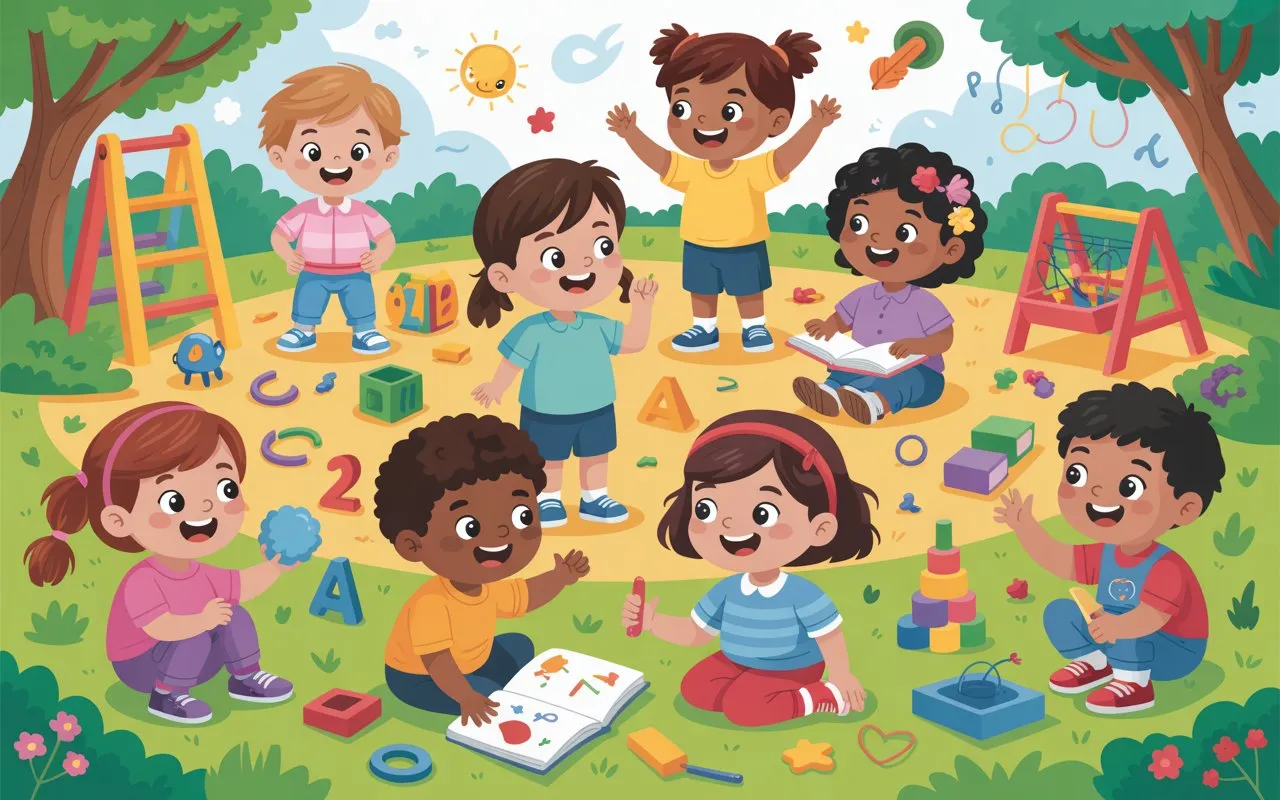
Early childhood education is one of the most basic establishments for a child’s advancement. Inquire about reliably appears that the encounters children have during their most punctual years essentially shape their cognitive, social, and emotional development. By giving an organized and sustaining environment, Early childhood education prepares children with the instruments they require to succeed scholastically and socially throughout life.
The Significance Of Early Learning
Early childhood is a period of quick brain improvement. During this time, children retain data at an mind-blowing rate, shaping neural associations that will influence learning for a long time to come. High-quality Early childhood education programs center on cultivating interest, inventiveness, and basic considering abilities. By presenting concepts such as numbers, letters, shapes, and problem-solving in an locks in way, children create a solid establishment for deep-rooted learning.
Social aptitudes are similarly vital. In preschool or childcare settings, children learn to associate with peers, share, arrange, and resolve clashes. These intelligences are essential in creating compassion, participation, and communication capacities that will benefit them throughout school and beyond.
Key Components Of Quality Programs
A quality Early childhood education program is more than just keeping children involved. It includes deliberateness arranging and educational modules custom-made for the formative stages of youthful learners. Play-based learning is a foundation, as it empowers investigation, creative energy, and hands-on problem-solving. Instructors direct exercises that advance dialect, motor, and social skills in an age-appropriate manner.
Another fundamental component is family inclusion. Guardians and caregivers are the child’s to begin with and the most compelling instructors. When schools and families work together, children get steady messages and support, fortifying learning and emotional security. Programs frequently incorporate parent workshops, customary communication, and opportunities for guardians to take part in activities.
Cognitive Advancement And Early Education
Early childhood education essentially impacts cognitive improvement. Children who go to organized programs are more likely to demonstrate much better memory, consideration, and thinking aptitudes. They moreover obtain a adore for learning that empowers interest and mental engagement throughout their lives. Presentation to assorted thoughts, problem-solving challenges, and organized schedules makes a difference; children create basic thinking abilities from an early age.
Language improvement is a basic perspective of cognition. Early childhood education programs emphasize lexicon development, comprehension, and communication abilities. Narrating, bunch talks, and intuitively perusing exercises make a rich dialect environment that makes a difference in children expressing themselves clearly and getting it across to others effectively.
Social And Passionate Benefits
In addition to cognitive development, Early childhood education sustains social and emotional well-being. Children learn to oversee their feelings, create self-confidence, and form sound connections with peers and grown-ups. Instructors show positive behaviors and direct children in understanding feelings, sympathy, and participation. These early encounters frame the premise for passionate insights, which is imperative for victory in both individual and professional life.
Furthermore, children exposed to different social settings create resilience and versatility. They learn to appreciate distinctive viewpoints, societies, and thoughts, which cultivates inclusivity and regard. These encounters are particularly imperative in planning children for a progressively globalized world.
Preparing For Scholarly Success
One of the most substantial benefits of Early childhood education is scholastic readiness. Children who take an interest in quality programs enter school with more grounded pre-literacy and numeracy skills, superior consideration ranges, and higher levels of inspiration to learn. Ponders show that these points of interest frequently translate into higher accomplishment in basic school and beyond.
Early introduction to organized learning schedules makes a difference. Children get it in the classroom, take it after enlightenment, and create self-discipline. These aptitudes are vital for victory in formal tutoring and make a positive direction for educational fulfillment all throthroughoutelecting the Right Program.
Choosing the right Early childhood education program requires cautious thought. Components to assess include educational modules quality, educator capabilities, course estimate, and the learning environment. Programs ought to offer a mix of organized exercises and free play, giving opportunities for both guided instruction and free exploration.
Safety and passion are too vital. A sustaining environment where children feel secure energizes risk-taking and experimentation, which are basic for learning. Watching how instructors interact with children and how children react can give insight into whether a program adjusts to a child’s needs.
Overcoming Barriers
Access to quality Early childhood education is not continuously impartial. Financial aberrations, geographic restrictions, and accessibility of prepared experts can influence interest. Governments, non-profits, and communities play a crucial part in guaranteeing that all children have get to to quality programs. Venture in Early Childhood Education is a speculation in the future, as it advances uniformity, decreases long-term educational gaps, and improves workforce readiness.
The Part Of Play
Play is frequently misjudged as an insignificant diversion, but in Early childhood education, it is an effective learning apparatus. Through play, children explore with social parts, illuminate issues, and create engine aptitudes. Whether it is building with pieces, role-playing, or investigating nature, play fortifies creative ability and imagination. Teachers deliberately join play-based exercises to guarantee children create cognitive and social abilities whereas getting a charge out of the learning process.
Long-Term Impact
The benefits of Early childhood education expand distant past the classroom. Children who go to high-quality programs are more likely to graduate from high school, pursue higher education, and secure steady busiemploymentrly instruction too diminishes the probability of behavioral issues, improves well-being results, and cultivates social engagement. By planning for children for future challenges, these programs contribute to more grounded communities and a more taught society.
Latest Posts…
- Early Childhood Education – Preparing Children For A Bright Future
- Vasa Fitness – Discover Workouts, Classes, And Gym Benefits Today
- Costco Travel – Find The Best Vacation Deals And Packages Today
- Lifetime Fitness – Top Tips For Workouts, Classes, And Wellness
- Allianz Travel Insurance – Protect Your Trip With Peace Of Mind
Conclusion
Early childhood education is a crucial venture in a child’s future. By supporting cognitive, social, and passionate improvement from a young age, it lays the foundation for scholarly victory, individual development, and deep-rooted learning. Guardians, teachers, and policymakers must recognize its significance and work together to guarantee each child has get to to quality early instruction. Giving a sustaining and invigorating environment from an early age enables children to reach their full potential and construct a shining, promising future.
By emphasizing the basic part of Early childhood education, we can make a world where each child has the opportunity to flourish, both scholastically and actually. The abilities and encounters picked up during these developmental years will shape eras to come, making early instructioaan fundamental foundation for an affluent society.
Frequently Asked Questions (FAQs)
1. What is the meaning of early childhood education?
Early childhood education refers to the structured teaching and care provided to children from birth to around eight years old. This stage focuses on supporting a child’s cognitive, emotional, social, and physical development during their most formative years. Early childhood education programs are designed to build foundational skills through play-based learning, guided activities, and age-appropriate instruction that prepares children for primary school and lifelong learning.
2. What are the 5 areas of learning in early childhood?
The five main areas of learning in early childhood typically include physical development, cognitive development, language and communication, social and emotional development, and creative or expressive arts. Physical development focuses on motor skills and coordination, while cognitive development involves thinking, problem-solving, and understanding concepts. Language and communication emphasize speaking, listening, and early literacy skills. Social and emotional development supports relationship-building and self-regulation, and creative development encourages imagination and self-expression through art, music, and play.
3. What is another name for early childhood education?
Another name for early childhood education is early years education. It is also commonly referred to as preschool education, pre-primary education, or early learning, depending on the country and educational system. These terms all describe programs that provide structured learning experiences for young children before they enter formal elementary schooling.
4. What are the goals of early childhood education?
The goals of early childhood education are to support the overall development of young children and prepare them for future academic success. These programs aim to build foundational literacy and numeracy skills, foster curiosity and creativity, and encourage positive social interactions. They also focus on developing independence, confidence, and emotional resilience, helping children become well-rounded learners who are ready to transition smoothly into primary school environments.