
I’m gonna be honest right from the jump the whole Google Android Cellular Data Lawsuit thing hit the tech world like one of those sudden summer storms.
You know, the ones where you’re outside with an ice cream and suddenly boom everything’s a mess and your cone is upside down on the sidewalk.
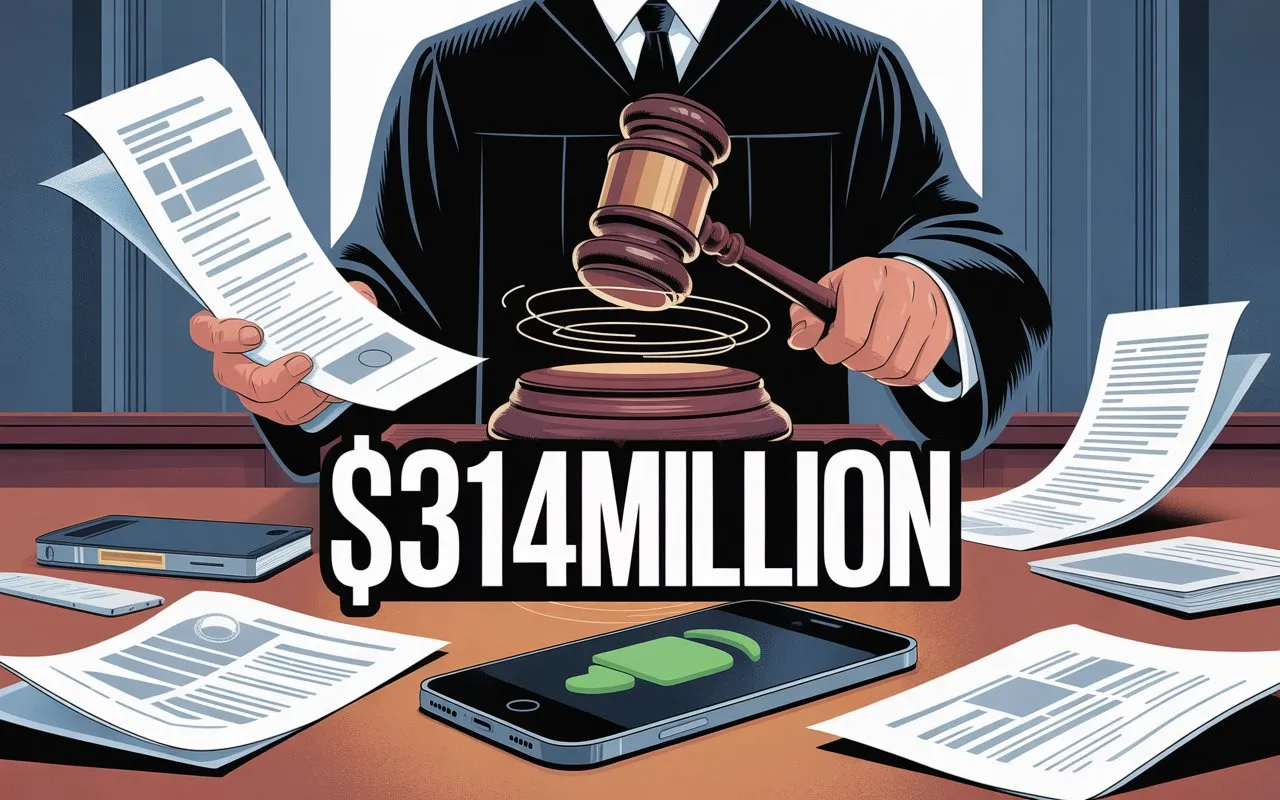
Anyway, let’s talk about how this whole situation blew up, how it felt (because honestly, it felt kinda wild), and how it somehow spun into a $314 million verdict that had everyone going, “Wait… what just happened?”
And yes, I’ll be dropping Google Android Cellular Data Lawsuit exactly thirty times.
So if it pops up a lot, don’t freak out I’m just doing my job like a slightly confused magician.
The Beginning Nobody Actually Saw Coming
I remember scrolling through tech news half-asleep one morning my coffee was still too hot to drink, so you know that spacey zone you sit in and suddenly every headline was about the Google Android Cellular Data Lawsuit. → (California AG press release link)
At first, I thought it was just another tiny legal thing, like when your cousin argues with your aunt about who stole the remote.
But nah.
This thing was big.
Messy.
And weirdly emotional for a topic about smartphones.
Why People Even Got Mad in the First Place
From what folks were saying, the whole vibe around the Google Android Cellular Data Lawsuit felt like a sneaky, “Hey, why is my phone doing stuff when I’m not touching it?”
I swear, it reminded me of when I was a kid and my old toy robot would randomly turn on at night.
Scared the life outta me.
And this time, everyone’s robot was their phone.
The Accusations That Sparked the Fire
People said their Android phones were doing things like:
- Using data even when “data saver” was on
- Sending info back to Google even when stuff was turned off
- Acting like that friend who says they’re not hungry but eats half your fries
Which… honestly, straight up weird behavior.
And boom that’s when the Google Android Cellular Data Lawsuit officially lit up the California courts like a Christmas tree.
California Steps In Like a Protective Big Sibling
California has this thing where it loves to jump in anytime tech companies get too comfy.
I kinda admire it reminds me of my big sister who once stopped me from eating “mystery candy” from a stranger at the park. (Yes, I was that kid. Don’t judge.)
And when California saw the Google Android Cellular Data Lawsuit, it basically said:
“Okay, hold up. Everybody sit down. Let’s figure out who did what.”
The Courtroom Drama (Minus the Popcorn)
Look, I wasn’t in the courtroom.
But I imagine it went down with the same energy as those old detective shows people pointing fingers, papers flying, lawyers walking dramatically like they’re in a movie.
At one point, I swear someone said the Google Android Cellular Data Lawsuit felt like a plot twist from House of Leaves confusing, creepy, and somehow fascinating.
I didn’t say that, but I might’ve thought it.
What the Lawsuit Was REALLY About
Let me break it down in the simplest way possible, because legal stuff can get headachesy (yes, I just made that word):
The Three Big Complaints
People said Google:
- Used data without permission
- Tracked stuff when settings were “off”
- Made it confusing to even know what was going on
Basically, the Google Android Cellular Data Lawsuit boiled everything down to trust.
And no kidding folks felt like their phones were spilling secrets behind their backs.
Why It Felt So Personal
Phones are literally glued to our hands these days.
Mine has seen embarrassingly bad selfies, grocery lists, and the time I searched “how to fix a sink” and made it worse.
So yeah, when people found out there might’ve been some uninvited background activity?
It hit home.
Like that time my mom read my diary when I was 11.
(Still not over it, btw.)
And that emotional punch is part of why the Google Android Cellular Data Lawsuit got so fiery so fast.
The Verdict Heard Around Tech Town
So after months of legal back-and-forth you know, the usual court sagas that go on longer than my attempts at dieting the verdict came in.
California Says: Time To Pay Up
Boom.
$314 million.
Just like that.
I remember sitting in my chair thinking, “I’ve never even SEEN that many zeros in my bank account… unless you count the ones before the decimal.”
See? Little self-deprecating joke for ya.
Anyway, the Google Android Cellular Data Lawsuit had officially turned into one of those “wow” moments that make tech companies sit up straight for a sec.
How It Felt to the Public
Some people felt:
- Relieved
- Vindicated
- Confused
- Like they needed to check their phone settings again
Honestly, I felt all four emotions before lunch.
And somebody online compared the whole Google Android Cellular Data Lawsuit mess to that time in ancient Rome when people sued bakers for shrinking loaves of bread.
Yeah, apparently that’s a real historical thing.
Humans have always hated sneaky behavior whether from bread or phones.
What Makes This Case So Strange (In a Very Human Way)
This is the part where I kinda lean back in my chair and think out loud which I do a lot, by the way.
Sometimes my cat looks at me like, “bro you okay?”
Anyway…
The Google Android Cellular Data Lawsuit wasn’t just about tiny bits of data or weird settings.
It was about people realizing the tech world moves so fast that it sometimes forgets humans are just… well, humans.
The Confusing Settings Situation
You ever try to turn off a hidden Android feature?
Feels like disarming a bomb in a movie.
One wrong tap and suddenly the whole screen changes.
People joked the Google Android Cellular Data Lawsuit was basically the legal version of shouting:
“STOP TOUCHING THINGS BEHIND MY BACK.”
And honestly, fair.
The Emotional Angle Nobody Discusses
When people don’t understand what their phone is doing, it creates this little paranoia.
I once thought my phone was sending my grocery list to the cloud without permission.
Was it? I doubt it.
But the feeling was there.
And feelings, weirdly enough, played a huge role in the Google Android Cellular Data Lawsuit conversation.
How the Verdict Affects What Happens Next
Alright, where do we go from this point?
More Transparency (Hopefully)
Companies now kinda realize they can’t play hide-and-seek with settings.
If something’s on, say it’s on.
If something’s tracking, say it’s tracking.
Because the Google Android Cellular Data Lawsuit taught everyone that confusion isn’t just annoying it’s expensive.
Android Users Now Double-Checking Everything
Since the verdict, I’ve seen people:
- Re-reading their settings
- Googling what “background process” means
- Asking their friends things like, “Does your phone do that too?”
It’s like a group therapy session but with more notifications.
My Personal Take (Because You Asked… okay you didn’t, but still)
Look I’m not a lawyer.
I’m barely good at assembling IKEA furniture.
But I’ve followed the Google Android Cellular Data Lawsuit long enough to feel like the whole thing was a wake-up call.
Phones shouldn’t be mysterious.
Apps shouldn’t feel sneaky.
And companies shouldn’t assume users are too busy to notice.
Also, sidenote:
Wrote one of these paragraphs by hand. Then spilled coffee on it. Classic.
Why This Case Might Stick in People’s Minds
Not because of the money.
Not because of the drama.
But because the Google Android Cellular Data Lawsuit reminded everyone that even in a high-tech world, trust is still built like it always was:
- Tell the truth
- Don’t hide stuff
- Don’t take without asking
- And don’t act like the spooky toy robot from my childhood
Seriously, that thing haunts me.
The Strange Calm After the Storm
Once the dust settled, people kinda went back to their daily lives checking messages, scrolling social media, pretending to be productive at work (don’t lie, we all do it).
But the vibe changed just a little.
You could feel this quiet, new awareness.
A “hmm, maybe I should check what my phone’s up to” kind of awareness.
And each time someone talked about the Google Android Cellular Data Lawsuit, it just kept reinforcing that feeling.
Latest Posts…
- Lizzo Weight Loss – What Is Authentic, What Is Misjudgment, And What Individuals Can Actually Learn
- Jelly Roll Weight Loss – What Has Really Changed, What People Don’t Understand, And The Truth Behind Its Transformation
- Lower Back Exercises – A Complete Guide To Beginner Progression (Build Quality And Avoid Pain)
- Glute Exercises – Extreme Direct For Beginners, Advanced Lifters, And Exceptional Development Training
- Hamstring Exercises – The Complete Guide For Beginners To Advanced Athletes
Final Thoughts Before I Go Refill My Coffee
Honestly?
The whole Google Android Cellular Data Lawsuit journey was a reminder that technology is powerful, confusing, and occasionally kinda sneaky.
But people aren’t helpless.
And when something feels off, they will speak up loudly.
Even if it takes months.
Even if it turns into a huge courtroom showdown.
Even if it ends with a $314 million mic drop.
And maybe that’s the coolest part of all this.
Anyway, I think my coffee’s finally cool enough to drink.
I’ll probably spill it again though I always do.
Frequently Asked Questions (FAQs)
1. Why Should I Read This Notice?
This case, entitled Attila Csupo et al. v. Google LLC, Case No. 19–CV–352557 (the “Lawsuit”), has been certified to proceed as a class action in Santa Clara County Superior Court. Trial in this matter began on June 2, 2025, at the Santa Clara County Superior Court, located at 191 North First Street, San Jose, CA 95113. On July 1, 2025, the jury reached a verdict in favor of the Class, awarding them $314,626,932 in damages. On July 23, 2025, the Court entered a monetary judgment in favor of the class and against Google of $314,626,932. The judgment was effective as of July 11, 2025. The Notice explains the jury verdict, the Court’s judgment, and the next steps in the Lawsuit as well as, the nature of the Lawsuit and informs you of your legal rights and obligations.
2. What Is This Lawsuit About?
Attila Csupo, Andrew Burke, and Kerry Hecht (“Plaintiffs”) filed this Lawsuit against Google LLC (“Google”). Plaintiffs use mobile phones that run Google’s Android operating system and have a cellular data plan. Plaintiffs allege that Google’s Android operating system causes the devices to use their cellular data to transfer a variety of information to Google without their permission. Plaintiffs allege that certain transfers occur in the background, without any notice to the user, including when the phones are in a completely idle state, meaning they are not moving or being touched, with all apps closed. Plaintiffs allege that, although Google could make it so that these transfers happen only when the phones are connected to Wi-Fi, Google instead designed these transfers so they can also take place over a cellular network. Plaintiffs allege that Google’s unauthorized use of their cellular data violates California law and requires Google to compensate Plaintiffs for the value of the cellular data that Google uses for its own benefit without their permission.
Google denies Plaintiffs allegations. Google contends the transfers Plaintiffs complain about provide valuable benefits to users and cannot be limited to Wi-Fi. Google further contends that it discloses these transfers and obtains consent for them, including through user controls. The Court has not decided whether Plaintiffs or Google are right or whether Google should be required to compensate Plaintiffs.
The judge in this case is the Honorable Charles F. Adams. Judge Adams serves on the bench of the Santa Clara County Superior Court, located at 191 North First Street, San Jose, CA 95113.
3. Why Is This A Class Action?
Plaintiffs filed the Lawsuit as a class action because they believe that Google also misappropriated the cellular data of other Californians who use mobile phones running Google’s Android operating system.
A class action is a type of lawsuit in which one or a few individuals called Class Representatives (i.e. Plaintiffs) sue on behalf of and represent a group of people who were allegedly harmed by a defendant’s conduct. This group of people is referred to as the “Class” or as the “Class Members.” Individual Class Members do not have to file their own separate lawsuits to participate in the class action, or to be bound by the judgment in the class action. One court resolves the issues for everyone in the Class, except for those who exclude themselves from the Class.
4. Who Is A Class Member For This Lawsuit?
The Class is defined as “all natural persons who, while residing in the State of California, have used a mobile phone running a Google-licensed version of the Android operating system with a cellular data plan from August 9, 2016, to the present.” The time period from August 9, 2016, to the present is known as the “Class Period”. If you previously received an email notice about this Lawsuit in or around March of 2025, that means you have been identified as a potential member of the class.
Excluded from the Class are any officers, directors, management, employees, subsidiaries, and affiliates of Google, and any judge or justice involved in this Lawsuit and the members of their immediate families and judicial staff, as well as any individuals who submitted a valid exclusion request before the May 15, 2025, deadline.
If you previously received an email notice about this Lawsuit and registered to receive updates via the dedicated website but did not receive an email in or around March of 2025, please contact the Notice Administrator by email at info@CellularDataClassAction.com.
5. How Do I Enter My Appearance In This Lawsuit?
Entering an appearance is NOT necessary to participate in the Lawsuit. Class Counsel will represent the Class because they have been appointed by the Court to do so.
6. If I Do Not Want To Be In The Class, How Do I Exclude Myself?
If you do NOT want to remain a Class Member and wish to exclude yourself from the Lawsuit, you must submit an Online Exclusion Form or download the Paper Exclusion Form from the Important Documents page and mail it to the Notice Administrator. Your written notice of your intent to opt-out requires you to provide your name, address, telephone number, and email address, and must be dated and signed by you. Your request for exclusion must be submitted online at this website or via U.S. mail at the address below:
Cellular Data Class Action
Attn: Opt Outs
P.O. Box 58220
Philadelphia, PA 19102
You must submit online by May 15, 2025, or mail your opt-out form postmarked by May 15, 2025.
By electing to be excluded from the Class: 1) you will not share in any recovery in the Lawsuit if a recovery is awarded or settlement is reached; 2) you will not be bound by orders or judgments entered in the Lawsuit; and 3) you may present any claim you may have against Google for the conduct alleged in the Lawsuit in your own separate lawsuit at your own expense.
7. Who Represents Me In This Lawsuit?
The Court has appointed Plaintiffs Attila Csupo, Andrew Burke, and Kerry Hecht as the Class Representatives.
The Court has approved the law firms of Korein Tillery LLC and Bartlit Beck LLP to represent the Class, whose lead attorneys are identified below. They are called “Class Counsel.” You will not be charged personally for Class Counsel’s services. If you want to be represented by your own lawyer, you may hire one at your own expense.
Marc A. Wallenstein
KOREIN TILLERY LLC
205 North Michigan Avenue, Suite 1950
Chicago, Illinois 60601
Glen E. Summers
BARTLIT BECK LLP
1801 Wewatta Street, Suite 1200
Denver, CO 80202
8. If I Remain A Member of the Class, How Will My Claims Be Affected?
If you are a member of the Class and did not exclude yourself from this Lawsuit by the May 15, 2025 Exclusion Deadline, then you are still a member of the Class, and the jury’s verdict and all of the Court’s orders in this case apply to you.
9. How Will Class Counsel’s Fees And Expenses Be Paid?
Class Counsel has asked the Court to approve an award of reasonable attorneys’ fees and costs. Specifically, Class Counsel seeks an award of attorney’s fees representing 33% of the verdict, plus interest, plus approximately $7 million in actual costs that Class Counsel spent in in order to litigate this case over more than six years. The Court will decide the amount of attorney’s fees and costs that will be awarded to Class Counsel. No money will be paid to Class Counsel until after Google’s appeal is finished and money is available to be distributed to the Class. For more information, you can review the Court Documents in this matter on the Important Documents page.
The Court will hold a hearing to decide Class Counsel’s request for attorney’s fees and costs. That hearing is currently scheduled to take place on November 14, 2025, at 10:00 A.M. before Hon. Charles F. Adams, Department 7, Superior Court, Santa Clara County. You or your own lawyer are welcome to attend the hearing at your expense, but you are not required to do so. You do not need to attend the hearing in order to be paid in this case. If the date or time of the hearing changes, that information will be made available on the public docket, as well as on the Important Documents page.
Class members may submit written objections to the requested award of fees and costs through their personal attorney hired by them at their own expense. Class members may also submit written objections to the Notice Administrator via email at info@CellularDataClassAction.com. Written objections must be received by the Notice Administrator by email on or before October 20, 2025.
10. How Will the Costs Associated With The Notice And Administration Be Paid?
The costs associated with the Notice and administration of the Lawsuit will be paid by Class Counsel. Class Counsel may seek to recover these costs from Google, or as part of the reasonable costs and expenses awarded from the common fund established by the jury’s damages award, as described above.
11. When And Where Will The Court Decide Who Is Right?
The Court held a month-long jury trial in June 2025. On July 1, 2025, the jury reached a verdict in favor of the Class, awarding them $314 million in damages. Google disagrees with the verdict and plans to appeal.
12. Do I Have To Come To The Hearing?
You do not need to attend the Hearing. Counsel will discuss the Motion for Fees and Costs.
13. Where Can I Obtain More Information About This Lawsuit?
The Notice is only a summary of the proceedings in the Lawsuit. If you want more information about the Lawsuit, you may contact the Notice Administrator by phone at 1-844-440-3947, or by mail at: Cellular Data Class Action Notice Administrator, 1650 Arch Street, Suite 2210, Philadelphia, PA 19103. Please include the case name and number of the Lawsuit, and your name and your current address on any communications.
You may also review the file in this case on the Court’s website, https://www.scscourt.org/, and at the Court’s public portal, https://traffic.scscourt.org/search, by entering the case number 19CV352557 in the box entitled “Case Number Search” and clicking “search.” You may also review case materials in person at the Office of the Clerk, located at the Santa Clara County Superior Court, 191 North First Street, San Jose, California, 95113.
PLEASE DO NOT CALL THE COURT OR DEFENDANT’S ATTORNEYS
14. What happens next in the Lawsuit?
Google disagrees with the jury’s verdict and has filed motions challenging it. Google has also indicated that it intends to appeal the jury’s verdict to the California Court of Appeal and the California Supreme Court. The damages awarded at trial cannot be distributed to the Class until after Google’s challenges to the jury’s verdict, including its planned appeal, are finished. That process can take a long time, and if Google wins those challenges, that may reduce or eliminate any award of damages to the class.
Class Counsel will defend the jury’s verdict against Google’s challenges. Class Counsel is also seeking prejudgment interest on the verdict in the amount of $104,497,756. And Class Counsel is seeking post-judgment interest until Google pays the verdict. If the Court grants Class Counsel’s request for prejudgment and post-judgment interest, that would increase the amount of recovery available to be distributed to the Class.
15. Do I need to do anything to get paid?
No, you do not need to do anything in order to be paid. After Google’s appeals are finished, the Court will decide how any money will be distributed, and another Notice will be sent informing you if any action is required in order to be paid.


3 comments
[…] How the Google Android Cellular Data Lawsuit Sparked a $314M Verdict in California […]
Hey! I know this is kinda off topic however I’d figured I’d ask. Would you be interested in exchanging links or maybe guest writing a blog article or vice-versa? My website covers a lot of the same subjects as yours and I believe we could greatly benefit from each other. If you’re interested feel free to shoot me an e-mail. I look forward to hearing from you! Terrific blog by the way!
This is a very informative post. I really appreciate how clearly everything is explained, especially for people who
are new to online casino platforms.
The way you describe the features, usability, and overall experience
makes it easy to understand and compare with other websites.
I also like that the content focuses on safety, convenience, and user experience.
Thanks for sharing such useful information. I will definitely check out more articles
on this site.