
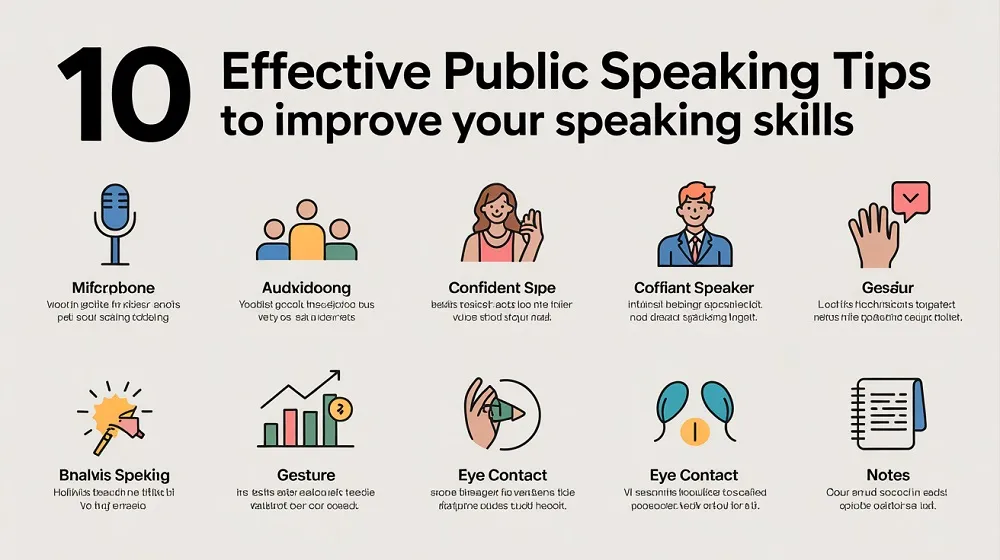
Ah, public speaking. The mere thought makes some people break into cold sweats, and honestly, I’ve been there too. I remember giving a speech in 7th grade and forgetting my first sentence mid-way. It was terrifying… and also kinda hilarious looking back. Over the years, I’ve learned a few public speaking tips that actually work, and I’m sharing them with you—warts, awkward memories, and all.
Why Public Speaking Tips Matter
Open talking isn’t fair around standing in front of individuals and talking. It’s almost interfacing, convincing, and making individuals keep in mind you. Without a few strong open talking tips, you’re likely to bungle, mutter, or go totally blank.
I once observed a speaker apprehensively tap through slides for 15 minutes, saying “Uh… so… yeah… um…” over and over. Felt like observing a squirrel attempt to do calculus. So definitely, arrangement is everything.
Prepare Your Material
Know Your Audience
- Research who will be attending
- Understand what they care about
- Adjust your language and tone accordingly
I remember presenting to a bunch of engineers and cracking a joke about my pet hamster. No one laughed. Lesson learned: know your crowd.
Structure Your Talk
- Start with a hook (a story, fact, or question)
- Organize main points logically
- End with a clear takeaway
One time, I tried to wing a speech without structure—it turned into a rambling mess about pizza, penguins, and time travel. The audience looked slightly confused… but entertained.
Practice, Practice, Practice
- Rehearse out loud
- Time yourself
- Record and watch yourself
I used to practice in front of my dog—she didn’t clap, but I swear I felt like a pro. Bonus: dogs don’t judge harshly.
Master Your Body Language
Stand Confidently
- Feet shoulder-width apart
- Hands relaxed at your sides or using gestures
- Avoid pacing too much
I remember freezing like a statue mid-gesture during my first big presentation. Felt straight up wild, but the audience didn’t notice (I hope).
Eye Contact
- Make brief eye contact with multiple people
- Don’t stare like a ghost from House of Leaves (spooky stuff…)
- Smile naturally
Oddly enough, my first attempt at intentional eye contact made me look like a deer caught in headlights. Practice helps.
Control Your Voice
Volume and Clarity
- Speak loudly enough to be heard
- Articulate words clearly
- Don’t rush
I used to speak so quietly during presentations that my audience often leaned in like curious cats. No kidding, it’s exhausting for them.
Use Pauses Effectively
- Pause after key points
- Avoid filler words like “um” and “uh”
- Let your audience digest information
Pausing feels awkward at first. I remember pausing too long once… silence filled the room. Then someone coughed, and I laughed along. Made it feel human.
Tone and Emotion
- Vary your tone to keep interest
- Convey enthusiasm
- Match your energy with the message
I once spoke about spreadsheets like they were magical treasures. Enthusiasm is contagious, even for boring topics.
Engage the Audience
Ask Questions
- Start with rhetorical or direct questions
- Encourage audience participation
- Listen actively
I asked, “Who loves coffee?” in a room of non-coffee drinkers once. Crickets. Still, interaction counts, even when it fails.
Storytelling
- Share personal anecdotes
- Use relatable examples
- Make lessons memorable
I remember telling a story about my cat interrupting my work. Everyone laughed. Lesson: humor + story = memorable moment.
Visual Aids
- Use slides or props to support your points
- Don’t overcrowd slides
- Keep visuals relevant
I once used a prop that fell mid-speech. The audience laughed, and honestly, it broke the tension in the best way.
Manage Anxiety
Breathing Techniques
- Deep breaths before speaking
- Pause to inhale during tense moments
- Relax your shoulders
I used to hyperventilate before speeches. Now, I breathe like a calm yoga instructor (well… sort of).
Positive Visualization
- Picture a successful talk
- Imagine audience smiling
- Repeat affirmations
I once visualized giving a speech in a room full of puppies. It helped… emotionally. Not practical, but calming.
Accept Mistakes
- Everyone slips up
- Laugh at yourself
- Keep moving
I once mispronounced a word spectacularly, and it became a running joke in my class for weeks. Felt weird, but I survived.
Use Feedback to Improve
Record Yourself
- Watch recordings critically
- Note gestures, tone, pacing
- Adjust for next time
I recorded myself and realized I waved my hands like a windmill… lesson learned.
Ask Trusted Friends
- Get honest feedback
- Identify blind spots
- Celebrate improvements
I once asked my cousin for feedback, and she said, “You sound smart… but nervous.” Spot on.
Extra Public Speaking Tips
- Dress comfortably but appropriately
- Arrive early to get a feel for the room
- Have water on hand
- Memorize opening lines, not the whole speech
- Smile and be human
Honestly, some of the best speakers I’ve seen mess up occasionally. Makes them real. Makes them relatable.
Mindset Matters
I still get nervous before big talks. No kidding. But thinking of it as a conversation instead of a performance makes a huge difference.
- Focus on sharing, not impressing
- Remember, nerves are natural
- Embrace quirks
One time, I spoke with a sock on my hand as a puppet… it lightened the mood. Not recommended for corporate settings, though.
Common Mistakes to Avoid
- Speaking too fast
- Overloading slides
- Ignoring audience reactions
- Forgetting to breathe
I once made all these mistakes in a row. Audience still smiled. Lesson: survive, learn, and laugh at yourself.
Final Thoughts
Public speaking is a ability, not a ability you’re born with. With these open talking tips, arrangement, hone, and self-awareness, anybody can make strides. I’ve had talks that went superbly and others that went… entertainingly off-base. Either way, each minute educates something.
Remember: lock in, breathe, grin, and grasp your ponderousness. These open talking tips aren’t magic—they’re a toolkit for people who need to interface and take off a check.

